










The worktop is the surface you touch more than any other in a kitchen, and for most homeowners the shortlist comes down to two materials: quartz and granite. Both are premium, both look superb, and both will comfortably outlast the appliances around them. They behave quite differently in daily use, though, and the right choice has less to do with which is objectively better and more to do with how your household actually cooks, cleans and lives. Here is an honest comparison from a team that templates and fits both.
What quartz and granite actually are
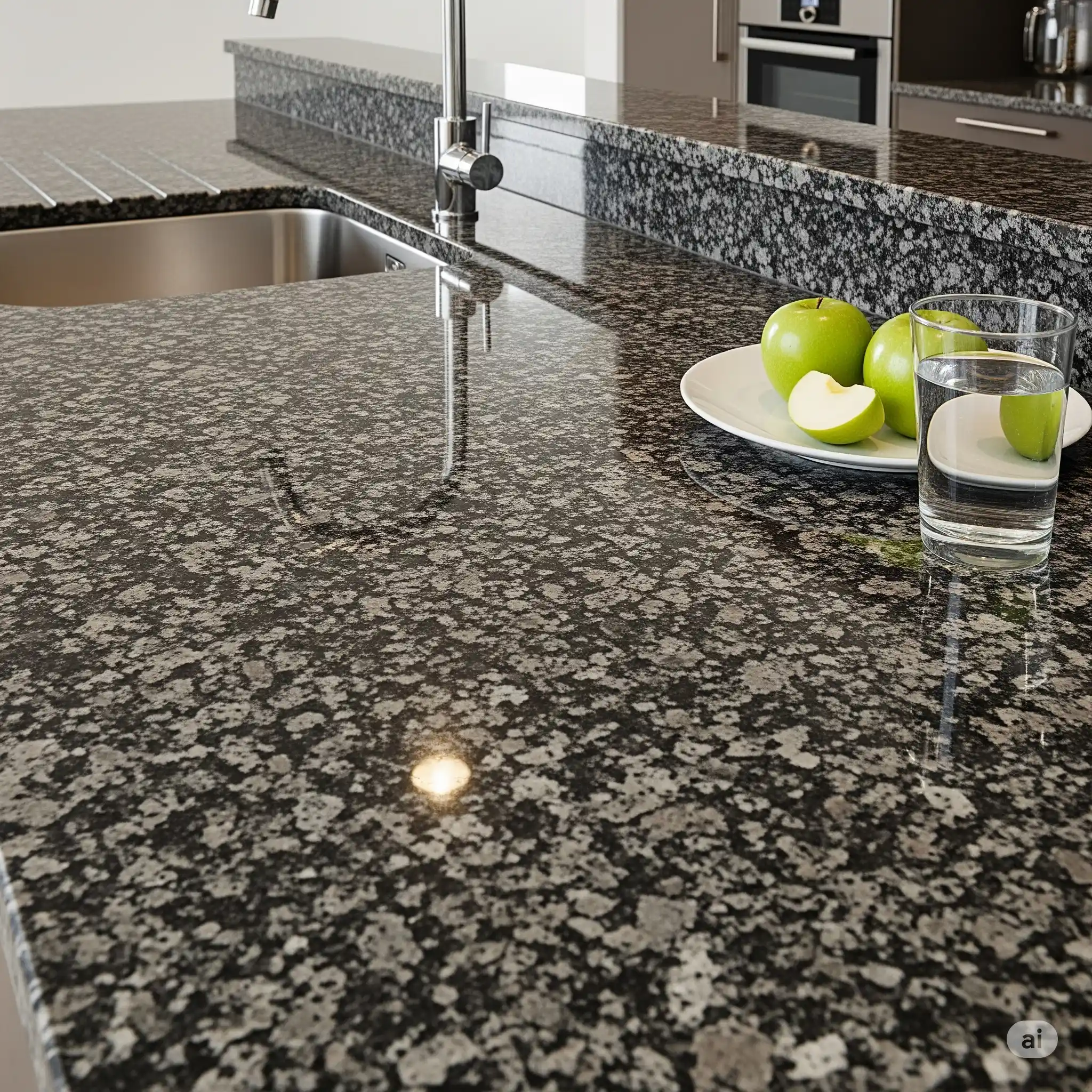
Granite is natural stone. It is quarried in blocks, cut into slabs and then templated to your kitchen, which means every granite worktop is genuinely one of a kind. The colour, pattern and movement come from the geology of the block it was cut from, so no two slabs match exactly.
Quartz is engineered. Ground natural quartz is bound with resin and pigment under pressure to produce a slab that is dense, non-porous and highly consistent. Almost every practical difference between the two materials traces back to that one distinction: one is formed by geology, the other by a factory process designed for predictability.
Quartz is engineered. Ground natural quartz is bound with resin and pigment under pressure to produce a slab that is dense, non-porous and highly consistent. Almost every practical difference between the two materials traces back to that one distinction: one is formed by geology, the other by a factory process designed for predictability.
Appearance, pattern and consistency
If you want a worktop nobody else has, granite is the obvious answer. Slabs vary in tone, veining and the amount of movement across the surface, so it is always worth viewing the actual slab rather than a small sample. A 100mm square tells you very little about how a piece of granite will read across a three-metre run.
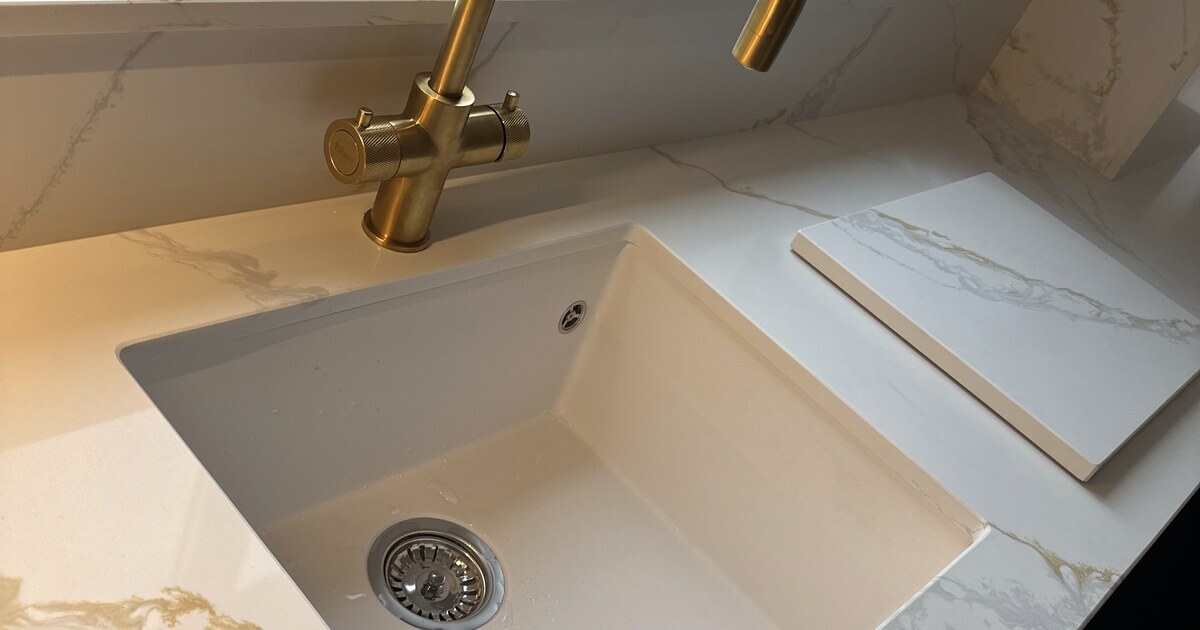
Quartz is the opposite proposition. Because colour and pattern are controlled during manufacture, what you see on the sample is close to what arrives in your kitchen. That predictability matters if you are matching an island to a perimeter run, planning a full-height splashback in the same material, or ordering in two stages. Quartz also offers marble-effect finishes with a consistency natural marble cannot provide, which is one reason so many contemporary kitchens use it.
Quartz is the opposite proposition. Because colour and pattern are controlled during manufacture, what you see on the sample is close to what arrives in your kitchen. That predictability matters if you are matching an island to a perimeter run, planning a full-height splashback in the same material, or ordering in two stages. Quartz also offers marble-effect finishes with a consistency natural marble cannot provide, which is one reason so many contemporary kitchens use it.
Living with each material day to day
Quartz is non-porous, so it never needs sealing. Warm soapy water and a soft cloth handle almost everything, and spills sit on the surface rather than soaking in. Avoid abrasive creams, scouring pads and strong alkaline cleaners, which dull the finish over time.
Granite is natural stone and is sealed on installation. Depending on the stone and how hard the kitchen works, that seal needs refreshing periodically. It is a ten-minute job, but it is a job, and it is worth knowing about before you commit. Wipe red wine, oil and lemon juice promptly rather than leaving them to sit.
Both materials are hard-wearing, and neither is a chopping board. Granite generally copes better with direct heat, while quartz contains resin, so a pan straight off the hob can mark it. Use trivets on both. One point worth raising early: prolonged direct sunlight can affect the colour of some quartz, so if your kitchen has bifold doors, a large roof lantern or a south-facing garden room, mention it at the survey and we will steer you towards a suitable option.
Granite is natural stone and is sealed on installation. Depending on the stone and how hard the kitchen works, that seal needs refreshing periodically. It is a ten-minute job, but it is a job, and it is worth knowing about before you commit. Wipe red wine, oil and lemon juice promptly rather than leaving them to sit.
Both materials are hard-wearing, and neither is a chopping board. Granite generally copes better with direct heat, while quartz contains resin, so a pan straight off the hob can mark it. Use trivets on both. One point worth raising early: prolonged direct sunlight can affect the colour of some quartz, so if your kitchen has bifold doors, a large roof lantern or a south-facing garden room, mention it at the survey and we will steer you towards a suitable option.
What actually drives the cost
We will not quote a worktop from a photograph, and it is worth being sceptical of anyone who does. What we can do is explain what moves the number, so the quotation makes sense when it arrives.
The main drivers are the material and slab you choose, the thickness, the total area, and the number of cut-outs, because sinks, tap holes, hob apertures and drainer grooves all take fabrication time. After that it is the edge profile, whether you want matching upstands or a full-height splashback, how many joints the layout needs and where they fall, and whether an island has to be a single uninterrupted piece. Access matters too: a large slab has to physically get into the room. Granite and quartz overlap heavily on price, so the decision rarely comes down to cost alone. If spreading the cost helps, 0% finance is available subject to status through Ideal4Finance.
The main drivers are the material and slab you choose, the thickness, the total area, and the number of cut-outs, because sinks, tap holes, hob apertures and drainer grooves all take fabrication time. After that it is the edge profile, whether you want matching upstands or a full-height splashback, how many joints the layout needs and where they fall, and whether an island has to be a single uninterrupted piece. Access matters too: a large slab has to physically get into the room. Granite and quartz overlap heavily on price, so the decision rarely comes down to cost alone. If spreading the cost helps, 0% finance is available subject to status through Ideal4Finance.
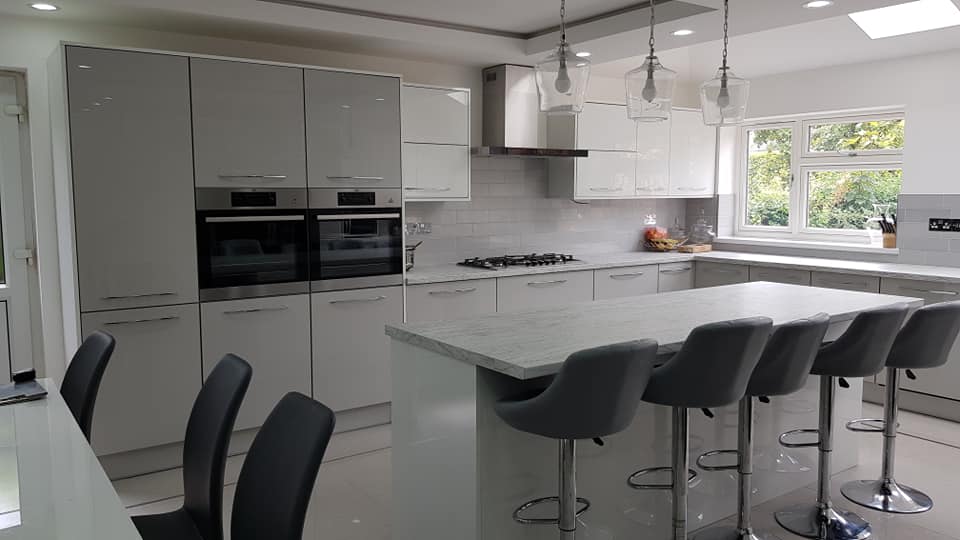
Which one suits your kitchen?
If your kitchen is busy, cooking happens in volume, and nobody in the house is going to remember to reseal anything, quartz is the sensible default. It is forgiving, consistent and easy to keep looking new.
If you want a surface with real character, and a little maintenance does not put you off, granite rewards you. Choose your slab in person rather than from a sample board.
These are not the only two options either. Solid wood brings warmth to an island or breakfast bar, and compact laminate gives a slim, modern profile at a more contained cost.
If you want a surface with real character, and a little maintenance does not put you off, granite rewards you. Choose your slab in person rather than from a sample board.
These are not the only two options either. Solid wood brings warmth to an island or breakfast bar, and compact laminate gives a slim, modern profile at a more contained cost.
Planning your worktops with ABJ
ABJ has designed, manufactured and installed bespoke furniture from our own Peterborough workshop since 2017, working with homeowners across Peterborough, Stamford, Huntingdon, Cambridge, Ely, Spalding, Market Deeping, Oundle, St Ives, Wisbech, Bourne and Grantham. We template, fabricate and fit worktops as part of a complete fitted kitchen or as a replacement on cabinets you already have, and the furniture we manufacture carries a 10-year manufacturer guarantee.
The most useful next step is a free design and home survey. We will look at your cabinets, layout, sink and hob positions, talk through samples and prepare a clear itemised quotation. Book a free design visit, or call the workshop on 01733 686767.
The most useful next step is a free design and home survey. We will look at your cabinets, layout, sink and hob positions, talk through samples and prepare a clear itemised quotation. Book a free design visit, or call the workshop on 01733 686767.